A major redevelopment of a sewage treatment site into a housing estate with around 1,500 homes has been hailed “ground-breaking” and “novel”.
Contracts have been signed between Guildford Borough Council and Thames Water who have agreed a way forward to deliver the Slyfield Area Regeneration Project.
The development has already been 15 years in the making, but on Monday (June 3) bosses from the council and water company were joined by government housing chiefs to formally launch the major redevelopment that will become Weyside Urban Village.
Around 1,500 homes will be built - with 40% being affordable - and the Thames Water treatment works will be relocated from the site on Woking Road freeing up brownfield land for the scheme.
Industrial works sites will also be provided.
This is the first time a water company has worked with a council on such a project, and one that Thames Water’s chief operating officer Steve Spencer said would be closely watched by the industry.
The scheme has also received praise from the Ministry of Housing, Communities and Local Government (MHCLG).
Anton Draper, head of investment and regeneration at MHCLG, congratulated Guildford on how it had worked on a way to free up brownfield sites to deliver housing.
Minister of State for housing Kit Malthouse MP, who has joined the race for Conservative leadership role, was originally due to attend but sent his apologies.
The government's housing department has a national target of 300,000 homes by mid 2020's.
Guildford's Local Plan has a target of 10,678 new homes by 2034.
Mr Draper said: “If we are going to make the 300,000 homes a year, which is the target, we need more councils like this that are driving forward really good partnership and delivery and more examples of how to make use of brownfield land."
Mr Spencer said relocating the treatment works, which could take three years including the decontamination of the site ready for housing development, was an opportunity for them to use more modern technology.
Thames Water have not built a new plant since Reading in 2005.
He said they now had newer odour control equipment and ways to treat the sewage that needed smaller sites.
He said: “It’s novel and it’s exciting. It’s ground-breaking. Other water companies are coming to talk to us to understand how this has been coming together.”
Costs for the scheme are still deemed “commercially sensitive” with funding coming from government grants, Enterprise M3 LEP (Local Enterprise Partnerships) and the council.
Agreeing on the “complex” scheme has been a “stumbling block” project staff said due to the understanding of how it will all work involving the council and the water company.
Surrey County Council has been involved in talks to support the road and waste infrastructure needed in place.
SCC deputy leader cllr Colin Kemp, who was at the launch, said: “We have been enabling and supporting this to make it happen. It’s been a very hard journey but now we have got over this major hurdle.”
Finer details are still being worked on and planning applications have to be submitted to both the county and borough council for approval.
James Whiteman, GBC managing director, said the signing of the agreement contract was "a significant milestone" for the council.
He said the energy-efficient homes would be sustainable.
Guildford council leader Cllr Caroline Reeves said: “This has been a project that has been going on for a very long time. Many different councillors have been involved. Residents in Stoke will be pleased to know they are getting a new sewage works.
“This is a major project for us and something we must support to ensure we get the absolute best for everybody. It’s an opportunity to create and new and vibrant community.”
The Slyfield Area Regeneration Project (SARP) is designated as a Housing Zone by Homes England. The 41 acres site is currently used for Thames Water Sewage Treatment Works (STW) a Guildford Borough Council (GBC) depot and Surrey County Council (SCC) waste management facilities.
The area is designated a strategic site in the borough's Local Plan.
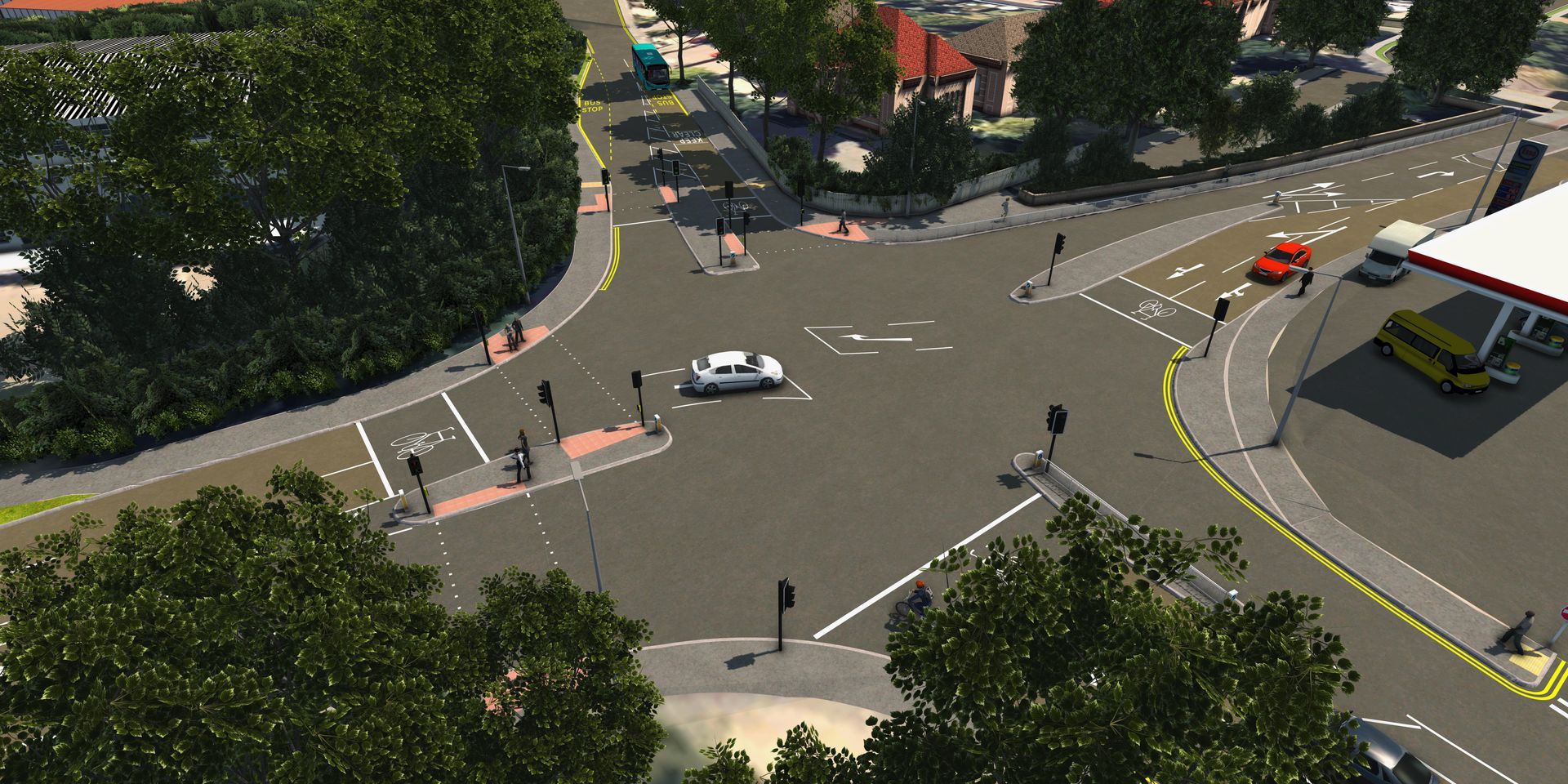
Work begins to transform two major junctions on A320 Woking Road Work to improve traffic flow, reduce congestion and enhance safety at the Woodlands Road and Moorfield Road junctions on Woking Road will begin on Wednesday 25 February 2026. These highways improvements are part of the wider Weyside Urban Village regeneration programme. Both junctions are being upgraded at the same time so the new traffic signals can operate together. This approach will help reduce exit blocking, ease congestion and improve journey reliability along this section of Woking Road. Woodlands Road junction improvements At the Woodlands Road junction on Woking Road, the existing roundabout will be replaced with a signal-controlled four-way junction. Co-ordinating this with the nearby Moorfield Road junction will help manage traffic more effectively and reduce delays, especially at busy times. Moorfield Road junction improvements At the Moorfield Road junction on Woking Road, a series of upgrades will increase capacity and improve traffic flow. A new northbound lane towards Woking will be added and the existing northbound lane will be converted to another southbound lane. Providing two southbound lanes approaching the junction will help to reduce congestion and make it easier for drivers to turn into the Slyfield Industrial Estate. A new signal-controlled pedestrian crossing will also be installed, alongside upgraded footways to improve safety and provide better connections with existing walking and cycling routes. Traffic management measures The scheme will be delivered in phases, starting with the removal of the Woodlands Road roundabout. This work will take place at night from Tuesday 2 March for around six weeks. A lane closure will be in place overnight for safety and lifted each morning to minimise disruption to daytime traffic. Councillor Vanessa King, Lead Councillor for Economy and Place said: “These improvements are another vital step in preparing the local road network for the Weyside Urban Village regeneration scheme. The new layouts will future‑proof the network for new homes and community facilities, while also helping to manage current traffic more effectively. Being committed to becoming a more environmentally responsible borough, we’re also placing strong emphasis on creating safer, more accessible routes for pedestrians and cyclists. “The Slyfield Industrial Estate is a major economic and commercial hub for Guildford, so improving access is essential for supporting local businesses. By delivering the works in carefully planned phases and managing traffic thoughtfully, we can keep the programme running safely while minimising disruption for residents, businesses and commuters. “This project is ultimately about preparing the area for the exciting transformation ahead and ensuring that the right access is in place as new homes, infrastructure and facilities come forward.”

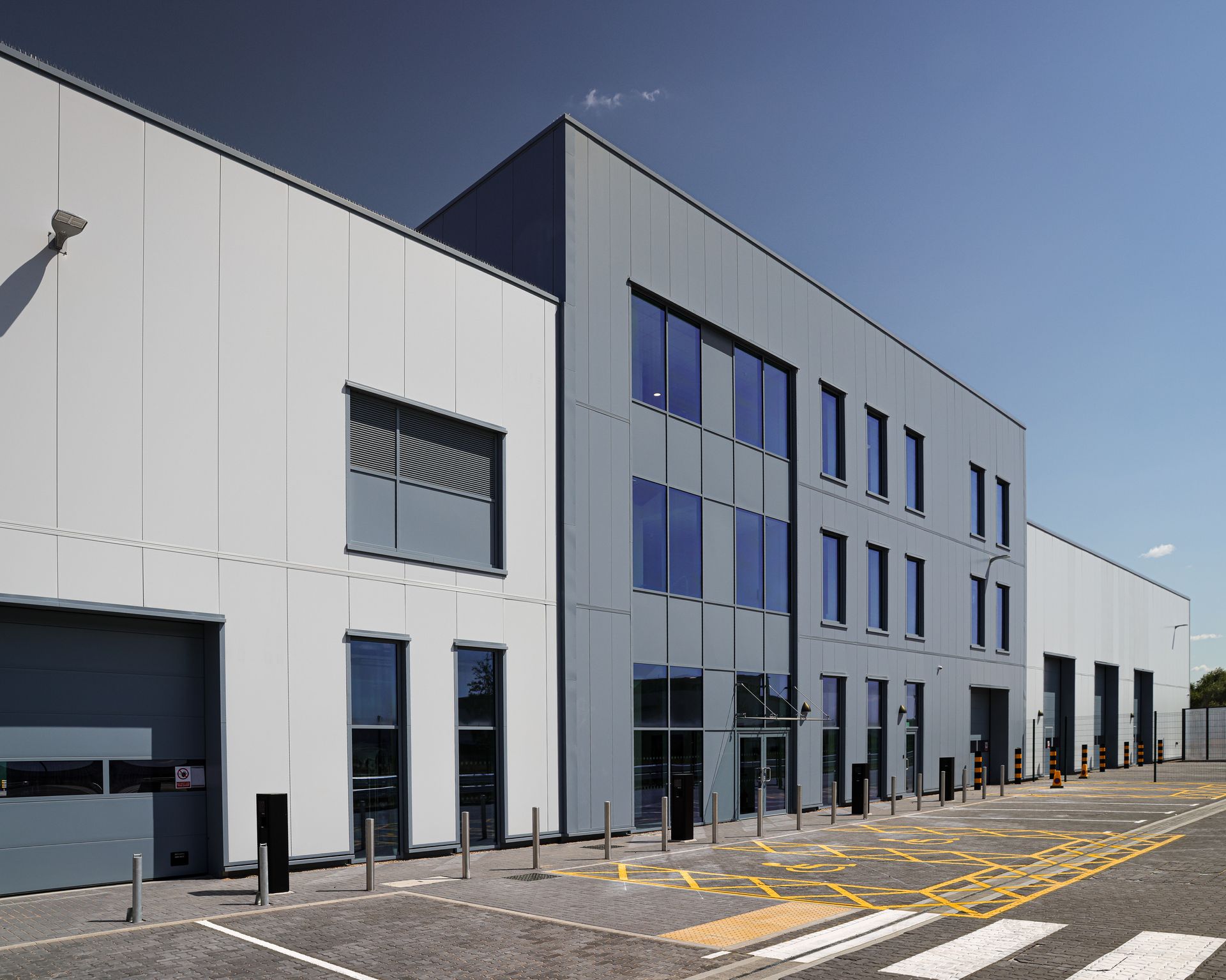
Our new depot, part of the wider Weyside Urban Village regeneration, is progressing well. Construction will be completed in July ahead of staff moving in later this year. The modern facility will provide essential infrastructure to support our operational services to run more efficiently and sustainably. Moving the depot to a new location will also free up the existing site to develop much-needed housing as part of the Weyside Urban Village scheme. The new depot site includes three main buildings: Depot building: a three-storey hub for operational teams, featuring offices, training rooms, meeting spaces, and welfare facilities. It will provide storage facilities, including a secure museum store. A fully equipped vehicle workshop will accommodate heavy goods vehicles. Multi-storey car park: located to the north of the site, the car park will be used for service vehicles, staff and visitors. It will include electric vehicle (EV) charging points and infrastructure for future EV expansion. Storage building: dedicated secure storage for grit and salt to support winter operations, alongside general storage and specialist equipment rooms are being provided. Significant progress has been made across all areas, with structural works complete on the car park and storage building. Infrastructure to support future fleet electrification, including refuse vehicles and gritters, has been installed, alongside fuel and vehicle wash facilities. Internal fit-out is now underway. External fencing and landscaping works are scheduled to begin soon. Cllr Julia McShane, Leader of Guildford Borough Council, said: "This investment will free up land for much-needed housing in our borough. It has given us an opportunity to design and build a new depot that will enable us to deliver essential services more efficiently and reduce environmental impact. This supports our commitment to becoming a more sustainable borough." Patrick Murphy, Divisional Director at McLaren Construction, commented: "The new depot is taking shape nicely and is on course for completion in the summer. You can already get a sense of how big a team and how many of the council's services can be accommodated together here." "Some of the features that make this a step change in facilities are already in place, such as charging infrastructure for a future fleet of council vehicles. The site's capabilities will really come to life as we connect water and electricity supplies over the next few months." "It's been a real pleasure to get to know new colleagues from the Guildford area as they have taken their first steps in construction industry careers. We hope they will be proud of the work they have done on the depot and will use their skills for many years to come.